

An Antonine Wall Weekend Plan for a Gentle History Walk
Looking for a weekend plan with fresh air and a reason to slow down? The Antonine Wall offers a flexible history walk built around Scotland’s Roman frontier, with sculptures and interactive exhibits noted by VisitScotland. Here’s how to shape the day around your group, weather, effort level, and verified access information—without forcing a perfect itinerary.

Lead software engineer and technical consultant working across React, Next.js, TypeScript, Node.js, product delivery, and team leadership.
- antonine wall weekend plan
- scotland history walk
- easy day trip scotland
- family outdoor plan
- roman frontier scotland
On this page
- Why the Antonine Wall suits a low-pressure weekend plan
- What the history adds to the walk
- The practical decision path before you leave
- 1. Confirm the exact place and access
- 2. Check opening and exhibit information
- 3. Match the plan to the group
- 4. Check the weather and ground conditions
- A simple Antonine Wall Sunday structure
- What to save, and what to leave open
- Official sources
The difficult part of planning a relaxed weekend is often not finding somewhere interesting. It is choosing an idea that leaves enough room for different ages, energy levels, weather, and attention spans. A long list of destinations does not solve that problem. One clear starting point can.
For Sunday, that starting point is Scotland’s Antonine Wall: an outdoor history idea with a strong sense of place, but without the pressure to turn the day into a tightly timed itinerary. VisitScotland describes the wall as a 37-mile-long barrier built on the orders of Emperor Antoninus Pius in AD 142. It was once the Roman Empire’s most northerly frontier, created to control trade and protect against Caledonian tribes. The site is now a UNESCO World Heritage Site, with sculptures and interactive exhibits that help visitors imagine the people and events connected with it. VisitScotland’s culture and history guide
That gives you the ingredients for a useful weekend plan: a meaningful outdoor setting, a story to share, and enough flexibility to shape the day around your group rather than around a supposedly perfect schedule.
Why the Antonine Wall suits a low-pressure weekend plan
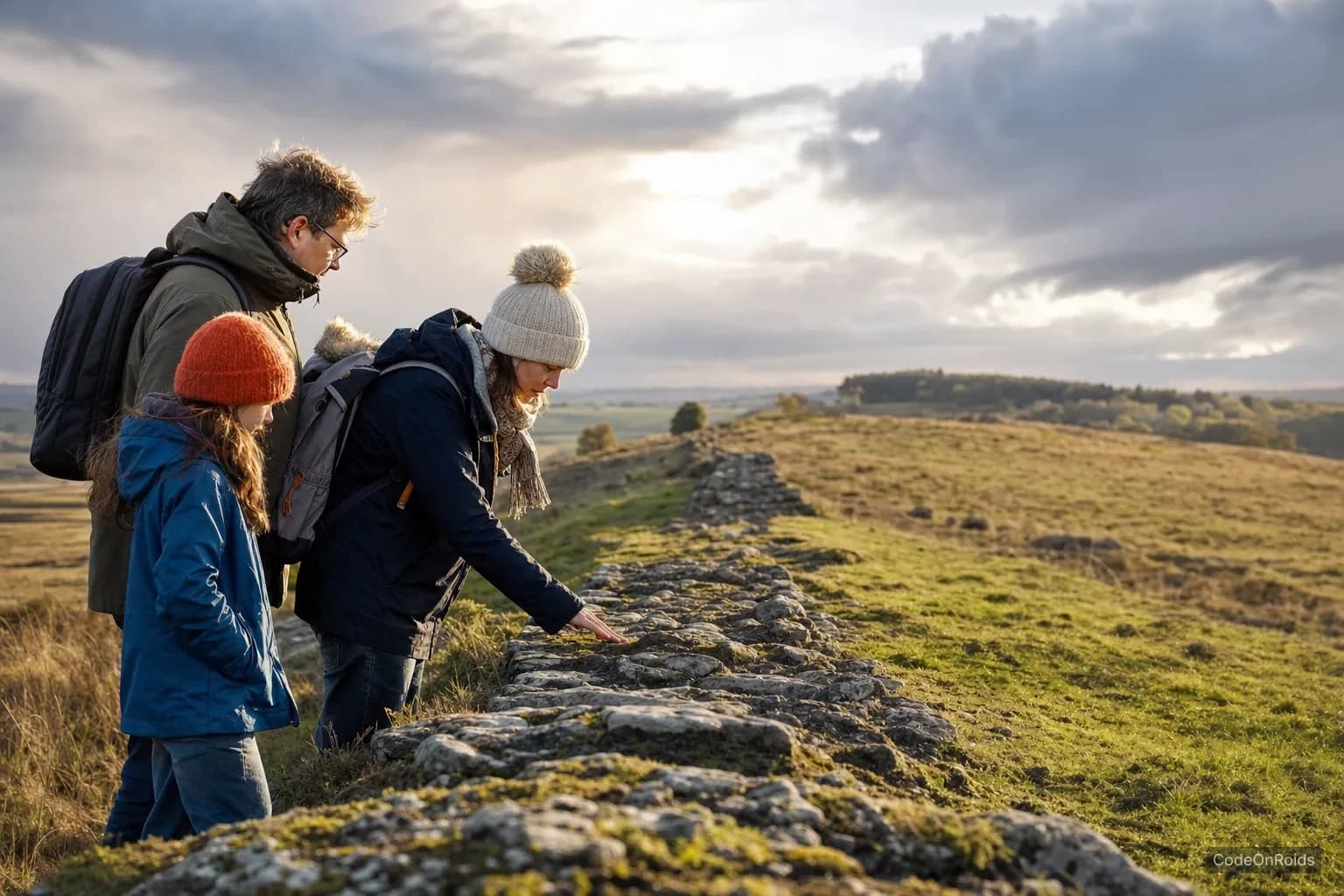
The wall works as a weekend idea because the source supports more than a scenic walk. It gives the outing a reason. You are not simply asking everyone to walk until somebody gets bored; you have a historical frontier, Roman engineering, local resistance, and a landscape filled with clues to discuss.
The official description also points to sculptures and interactive exhibits. Those details matter for mixed groups. Someone may enjoy the broad historical story, while someone else prefers stopping at an object, display, or visual detail. Children and adults can approach the same place differently without needing separate activities.
That is an interpretation of the supplied information, not a guarantee about any individual visit. The source does not specify which exhibits are open on a particular day, how long a visit takes, or which sections are easiest. Treat those as live-check items before travelling.
The central decision is therefore simple: how much structure does your group need?
- If people want an easy outing, make the wall the main destination and leave space for pauses.
- If the group enjoys history, read a little about the Roman frontier before going and use the sculptures or exhibits as conversation starters.
- If attention is mixed, avoid promising a full-length walk. Choose a manageable section only after checking current route and access information.
- If the weather looks unsettled, make the plan conditional rather than treating the destination as an obligation.
The official source confirms the wall’s historical scale, but it does not provide a specific walking route, access instructions, opening hours, parking details, facilities, accessibility information, or current conditions. Those details need to be checked with the relevant official destination information before departure.
What the history adds to the walk
A good outdoor plan does not need a packed programme. One strong question can be enough to make the landscape feel different.
At the Antonine Wall, begin with the frontier itself. Why would the Roman Empire build a barrier here? VisitScotland says its purposes included controlling trade and protecting against Caledonian tribes. That creates a useful contrast between the physical wall and the movement it was intended to regulate: people, goods, armies, and ideas crossing a landscape that was never just empty scenery.
The date also gives the day a clear anchor. The wall was built in AD 142 under Emperor Antoninus Pius. You do not need to turn that into a lecture. It can simply become a small piece of shared context before the walk: this was a project planned at the edge of a huge empire, and its remains still shape how the place is understood.
The source also mentions sculptures and interactive exhibits. If these are available during your visit, they can help translate a distant period into something more tangible. Look for the details that make the story easier to picture: the scale of the construction, the people who lived near it, and the tension between an imperial boundary and the communities beyond it.
Keep the conversation light. Ask what the group thinks the wall was like to build, what might have made the location difficult, or why a frontier would need more than stones alone. These are prompts for curiosity, not claims about what you will see on the day.
The practical decision path before you leave
Because the supplied source is broad rather than route-specific, preparation should focus on verification rather than overplanning.
1. Confirm the exact place and access
“Antonine Wall” describes a substantial historical barrier rather than one single, fully specified stop in the supplied excerpt. Decide which official location or section you intend to visit, then check its current access information, route details, and any site-specific guidance.
Do not assume that every part of a 37-mile-long barrier offers the same experience. The source confirms the overall length and historical significance, not the condition or suitability of every section.
2. Check opening and exhibit information
The source mentions sculptures and interactive exhibits, but it does not state their opening times or availability. Check the latest official information before setting expectations, especially if the exhibits are important to your group.
This is also where you can confirm whether any seasonal changes, temporary closures, or visitor guidance affect your chosen stop. Those are live details, so they should not be inferred from the historical description.
3. Match the plan to the group
Choose the effort level after checking the route, not before. A family with younger children, a group with different walking speeds, and two friends looking for a longer outing may all use the same historical destination differently.
A relaxed version might be: arrive, explore the confirmed accessible area, look for the historical interpretation, pause for conversation, and leave enough time for the return journey. A more ambitious version can include more walking only if the official route information and current conditions support it.
4. Check the weather and ground conditions
The supplied sources do not provide a forecast or current trail conditions. Check those close to departure and adapt accordingly. Comfortable clothing and footwear are sensible general preparation for an outdoor plan, but the exact requirements depend on the section you choose and the conditions that day.
The important rule is not to treat the original plan as more important than the people taking part. If the weather changes or the route feels unsuitable, shorten the outing, move the timing, or save the idea for another weekend.
A simple Antonine Wall Sunday structure
Here is a flexible framework rather than a fixed itinerary:
- Before leaving: confirm the specific section, access, opening information, weather, and any current visitor guidance.
- At the destination: begin with the landscape and the basic story: a Roman frontier built in AD 142 under Antoninus Pius.
- During the walk: use the sculptures, exhibits, or visible remains as prompts for conversation if they are available.
- For the group: let people choose their pace. Not everyone needs to cover the same distance or spend the same amount of time with the history.
- Before heading home: leave room for a final pause rather than squeezing in one more stop.
This structure deliberately avoids invented timings, prices, restaurant recommendations, transport claims, or promises about what will be open. The supplied material does not support those details. If you want to add a café, meal, or another attraction, verify it separately and treat it as an optional extension rather than part of the confirmed Antonine Wall idea.
What to save, and what to leave open
Save the destination because it offers a useful combination: open-air time and a story with enough depth to make a simple walk feel purposeful. Leave the exact route, timing, facilities, and exhibit availability open until you have checked current official information.
That balance is what keeps the plan friendly. You have a clear anchor, but nobody has to perform the perfect day. A slower group can pause more. A curious group can spend longer with the history. A weather-conscious group can change its mind without declaring the weekend a failure.
The Antonine Wall is therefore not a promise of one particular experience. It is a practical invitation to build a gentle history walk around a verified section of Scotland’s Roman frontier, then adapt the day to the people who come along.
Save the idea for a free Sunday, send it to someone who enjoys a walk with a story, and check the official details before you set off.